The AI Conversation Small Businesses Keep Getting Wrong
Everyone’s worried about deepfakes and robocalls. Almost no one is talking about how AI is changing the way customers find you.
November 6, 2026
by:
Amy Winter
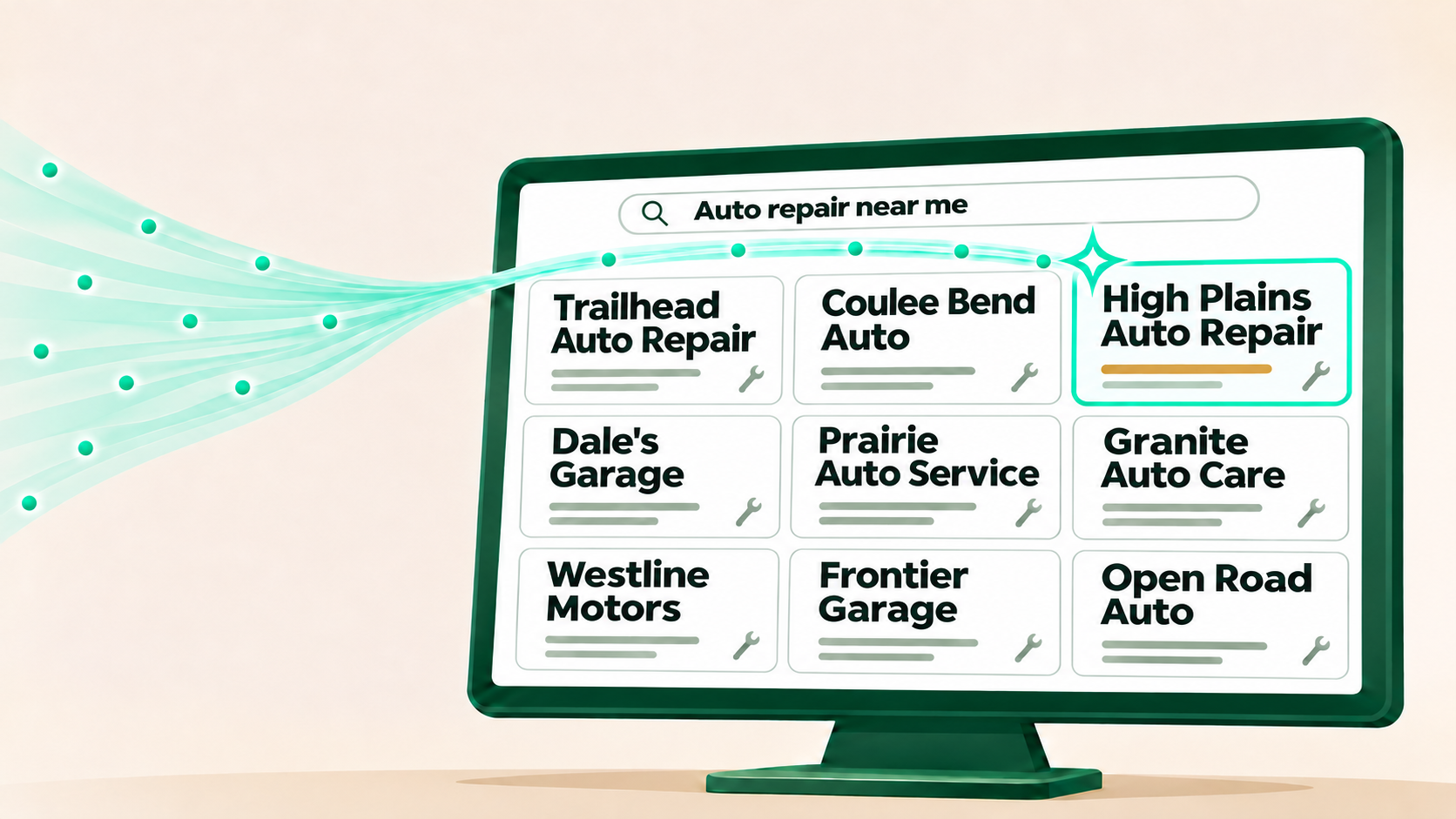
Most of the fear around AI focuses on what it can do to people: deepfakes, identity theft, robocalls. Little of it focuses on what AI can do for a local business trying to be found. AI is already reshaping how people search, ask questions, and get answers, and businesses that ignore this shift risk becoming invisible in exactly the places their customers are now looking. Used well, AI should assist your business, not run it. The opportunity belongs to the businesses that lean in deliberately, not the ones sitting it out.
One Story Got Told a Lot Louder Than the Other
At a recent networking event, many conversations about AI started from the same place: worry.
People talked about AI-generated calls that sound convincingly human. They talked about cloned voices, stolen identities, and scams that are harder to spot than they used to be. Several people said, in one way or another, that technology feels like it's moving faster than anyone's ability to keep up with it.
None of that is overblown. AI has made it easier to fake a call, a photo, or a message. That deserves real caution.
But almost nobody brought up the other half of the story: what AI is already doing to change how people search for businesses like theirs.
Fear Without a Plan Isn't a Strategy
It's worth naming the tension directly. We think AI should assist your work, not take over your life or your business decisions. That's not a hedge. It's the whole point. A tool that makes you faster or more visible is useful. A tool you hand full control to is a liability.
The businesses we talked to were stuck in the first half of that equation. They saw AI mostly as something happening to them: robocalls, deepfakes, noise. They didn't see it as something they could put to work carefully, on their own terms.
That's an understandable place to land. It's also a missed opportunity.
Where the Real Opportunity Sits: AI Search
Search behavior is shifting, and faster than most business owners realize. More than a third of consumers now say they start their searches with an AI tool instead of a traditional search engine, up from almost nothing two years ago. Search hasn't disappeared. It's split into two paths, and a business that only shows up on one of them is only half-visible.
Here's the part that surprises people most: even a plain Google search isn't just "Google" anymore. Google's own AI Overviews now appear at the top of a large share of search results and reach billions of people every month, generating a summarized answer before a single traditional listing shows up. If your content isn't structured well enough for that summary to pull from it, you don't get seen. That's true even if you'd have ranked well the old way.
Put simply: AI search isn't a future trend to plan for eventually. It's already sitting on top of the search results your customers are using today.
This shows up in a few overlapping forms:
- SEO (Search Engine Optimization): how well your site is set up to rank in traditional search results
- AEO (Answer Engine Optimization): how well your content is structured so AI tools can pull a direct answer from it
- GEO (Generative Engine Optimization): how likely your business is to be cited or referenced inside an AI-generated response
If a website isn't built to be read clearly by both people and AI systems, it becomes harder to find in either place, even if the business behind it is excellent.
What This Looks Like in Practice
None of this requires a business to reinvent itself. In practice, it usually means:
- Writing content that answers the actual questions customers ask, in plain language
- Structuring pages with clear headings, lists, and direct answers near the top
- Building on a platform fast and flexible enough that search engines and AI tools can crawl and understand it without friction
A Small Example From Our Own Work
We're not sharing this as a case study. It's just a piece of the same process we're describing. Earlier this year, we rebuilt our own site on Webflow, a platform chosen specifically for speed and flexibility, and restructured our content around the direct-answer format described above.
Since then, we've started showing up inside AI-generated search results, not because we chased a trend, but because we built the site to be legible to the tools people are now using to search.
Helping, Not Replacing
This is the distinction that got lost in most of the conversations we heard at that event. AI can draft a first pass, summarize a report, or help a website communicate more clearly. What it shouldn't do is make your decisions for you, replace judgment, or become a stand-in for the parts of the business that need a human.
Treated as an assistant, AI extends the work you're already doing. Treated as a replacement, it starts to erode the things that made the business worth trusting in the first place.
A Few Questions We Keep Hearing
Does optimizing for AI search mean giving up control over how my business is represented?
No. It means giving AI tools clearer, more accurate information to work from, so what they surface is closer to how you'd describe your business yourself.
Is AEO just a rebrand of SEO?
Not quite. SEO is still about ranking in traditional search. AEO is about being structured clearly enough that an AI tool can extract and cite a direct answer from your content.
Do I need to overhaul my whole website to show up in AI search?
Not necessarily. It usually starts with restructuring existing content around clear questions and answers, then building from there.
Where We Go From Here
The fear we heard at that event wasn't misplaced. It just wasn't the whole picture. AI is already reshaping how customers find and evaluate local businesses. The opportunity is still open for the businesses willing to engage with it deliberately, rather than avoid it entirely.
We'll keep sharing what we learn as this work continues.