30 Seconds and 30 Years: Why Human Expertise Matters in the Age of AI
AI makes execution fast. Experience decides what's worth executing.
September 24, 2026
by:
Jen Williams
AI can generate an answer in seconds. Knowing whether it’s the right answer is another matter.
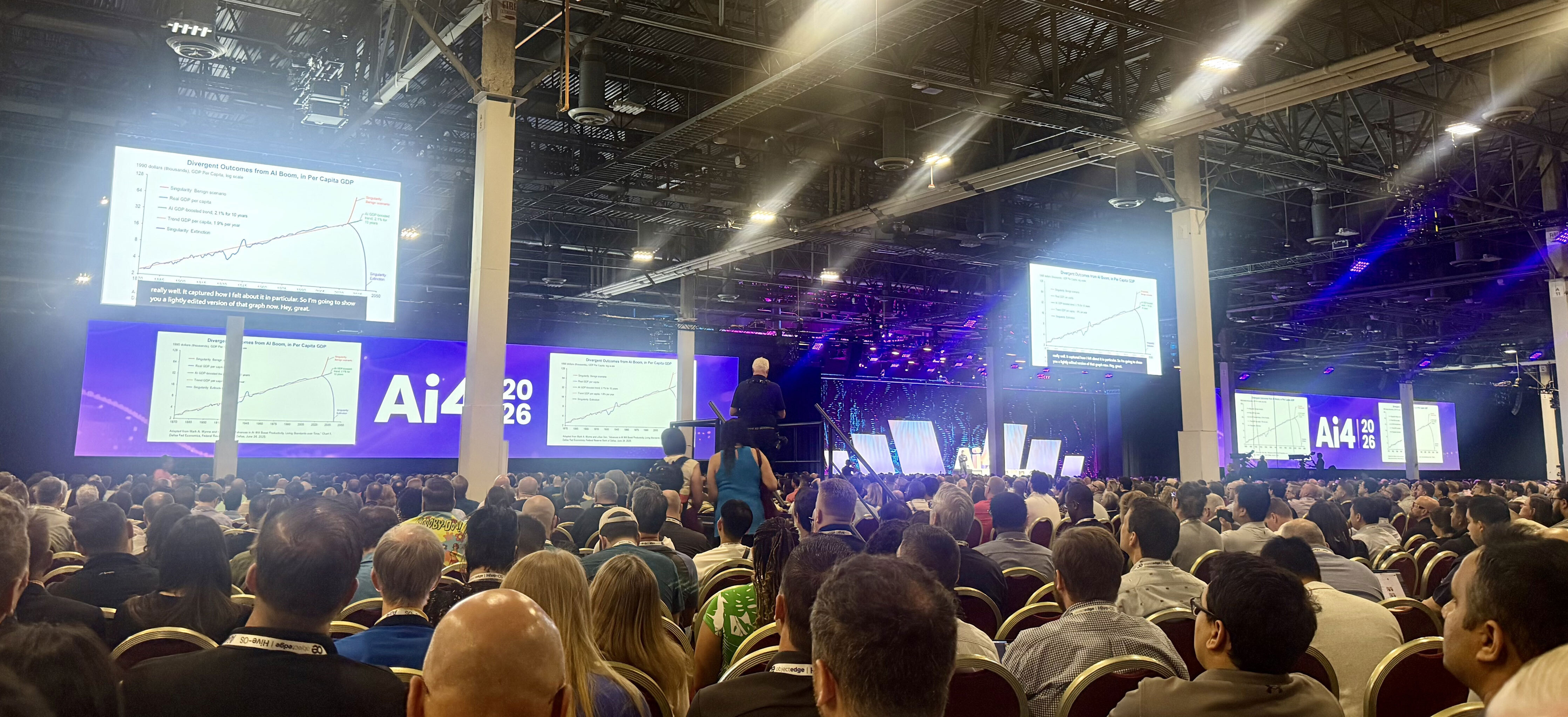
Someone at Ai4 asked a speaker how long it had taken him to write the detailed AI prompt he’d just demonstrated.
His answer was “30 seconds and 30 years.”
Thirty seconds to type it. Thirty years of experience to know what to type.
Of everything I wrote down during several days at one of the largest AI conferences in the country, that may be the line I’ve thought about most since coming home because it captures something important about this strange moment we’re in.
Artificial intelligence is making execution incredibly fast. Experience is what tells us what deserves to be executed.
AI Can Generate Ideas. Humans Still Need to Judge Them.
Ask AI for five headlines and you’ll have them almost immediately. Ask for 20 and you’ll have those, too.
The scarce resource is no longer necessarily the ability to generate another idea. Increasingly, it’s the ability to look at those ideas and understand which one sounds like the client, which will actually resonate with the audience, which has been done a hundred times before, which makes a promise we can’t support, which is almost right but needs a subtle change—and when all five are simply bad.
That judgment doesn’t appear magically because we have better technology. It comes from experience.
One of the recurring ideas at Ai4 was that people still have a fundamental context advantage over AI. We know things that aren’t always written down. We know what happened in the meeting three months ago. We remember why the client hated that particular direction last time. We recognize when something technically meets the assignment but somehow misses the point.
We read facial expressions. We hear hesitation. We understand relationships, history and timing. A person can walk out of a meeting and say, I know that’s what they asked for, but I don’t think that’s actually what they need.
That’s judgment. And as AI makes production easier, judgment becomes more valuable, not less.
AI Needs Human Quality Control
There’s another reason experience matters: AI doesn’t always look uncertain when it’s wrong.
Sometimes it produces a bad answer with exactly the same confidence, polish and authority as a great one. As these systems get better, their outputs can become easier to trust—which makes critical thinking and quality control even more important.
The human role isn’t disappearing. It’s changing.
Instead of producing every word, number, idea or analysis ourselves, more of us will be responsible for directing the work, evaluating it, questioning it and deciding when it’s ready.
Knowing when to ask “Can you double-check that?” may become as important as knowing what to ask in the first place.
This is especially relevant in creative work. AI can brainstorm, create storyboards, develop variations, analyze feedback, generate concepts and rewrite copy in seconds. Those are powerful capabilities, and they belong in the creative process.
But anyone who has been part of a really good creative session knows that the ideas aren’t always coming only from the words being said.
Someone makes an offhand comment. Another person laughs. Someone else says, “Wait. Go back to that.” The original idea gets abandoned, combined with something completely unrelated and suddenly turns into the thing everyone knows is right.
AI can’t read that room in the same way people can.
Creativity isn’t simply output. It’s experience, instinct, collaboration, taste and human reaction colliding at the right moment. AI can expand that process without becoming the whole process.
AI May Make Expertise More Valuable, Not Less
There’s a lot of understandable anxiety about what artificial intelligence means for people’s jobs. But I came home from Ai4 thinking about another possibility.
What if AI doesn’t make expertise less important?
What if it gives expertise more leverage?
Someone who has spent decades learning a business can now analyze, create, explore and execute ideas at a speed that wasn’t previously possible. A strategist can evaluate more possibilities. A creative team can visualize ideas sooner. An experienced professional can turn decades of accumulated knowledge into questions, analyses and outputs in seconds.
The technology doesn’t erase those 30 years. It allows those 30 years to do more.
That’s why I don’t think the most interesting future is humans versus AI. It’s people who know their craft, understand their audience, remain relentlessly curious and learn how to use AI as an extension of what they already know.
Thirty seconds is impressive.
But don’t underestimate the thirty years that made those seconds valuable.
Frequently Asked Questions About AI and Human Expertise
Why is human expertise still important when using AI?
AI can generate and analyze information quickly, but humans provide business context, lived experience, judgment and an understanding of relationships and nuance. Expertise helps people evaluate whether an AI-generated answer is accurate, appropriate and useful.
Can AI replace human creativity?
AI can support many parts of the creative process, including brainstorming, visualization, variations and production. Human creativity also depends on experience, emotion, cultural understanding, collaboration, taste and the ability to interpret human reactions, making human judgment an important part of the process.
Why does AI need human quality control?
AI can produce inaccurate or misleading information while sounding highly confident. Human review helps verify facts, recognize missing context, evaluate quality and determine whether an output is appropriate for its intended use.
Will AI make experienced employees less valuable?
AI may actually increase the leverage of experienced professionals by allowing them to apply their knowledge across more information, possibilities and outputs in less time. The combination of subject-matter expertise and AI fluency can be more valuable than either alone.
What skills will become more important as AI adoption grows?
Critical thinking, judgment, creativity, communication, subject-matter expertise, curiosity and the ability to effectively collaborate with AI are likely to become increasingly important as more routine tasks can be automated or accelerated.